
Concrete Driveway Cost Guide: How to Estimate Yardage, Finishing, and Total Price
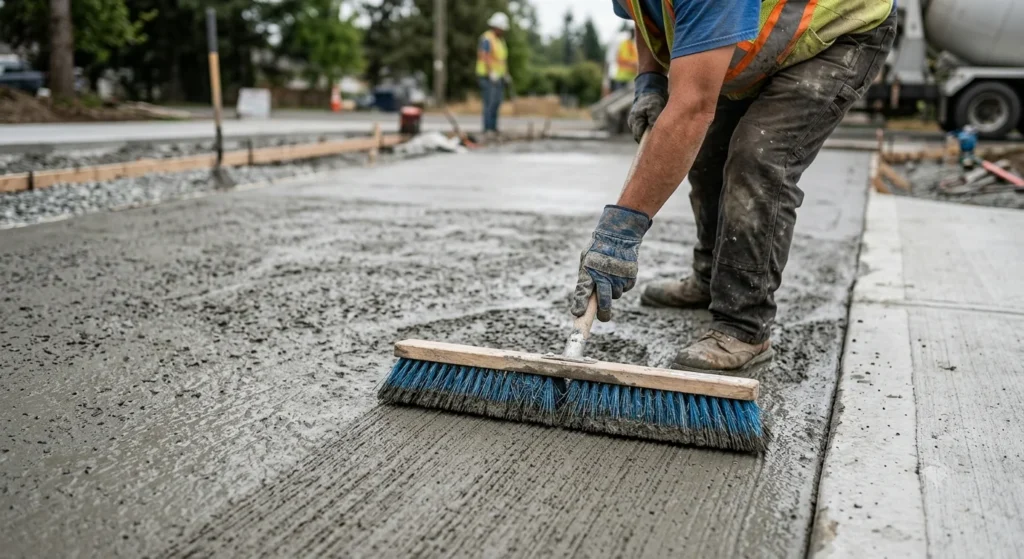
A concrete driveway cost estimate combines two things contractors normally figure separately: how much ready-mix concrete the slab requires, and what it costs to have that concrete formed, poured, and finished. This guide breaks both pieces down so you can build a realistic number before getting bids — and understand which costs (excavation, gravel base, permits) typically aren’t included.
Step 1: Calculate Concrete Yardage
The volume math is the same as any slab: length × width gives surface area, multiplying by thickness (converted from inches to feet) gives cubic feet, and dividing by 27 converts that to cubic yards. Getting yardage right matters because ready-mix is sold and delivered by the cubic yard — ordering short means a second truck fee and a visible cold joint, while ordering too much wastes money on yardage that still has to be paid for and hauled away.
A waste factor of 5–10% is standard because real sub-grade is never perfectly flat.
Choosing Driveway Thickness and Width
Standard residential driveways for cars and light trucks are 5–6 inches thick. Driveways that will see heavier vehicles, like RVs or delivery trucks, should be 6–8 inches with reinforcement. Width is typically 10–12 ft for a single-car driveway and 20–24 ft for a double-wide.
Step 2: Add Finishing Cost
Finishing cost is estimated separately from material, on a per-square-foot basis, since labor to broom-finish, edge, and cut control joints scales with surface area, not concrete volume. Most concrete driveways run $6–$12 per square foot installed overall, depending on thickness, region, and finish — decorative stamped or colored finishes typically add $2–$6 more per square foot on top of a standard broom finish.
What's Usually Not Included
A basic concrete cost estimate covers material and finishing labor only. Excavation, compacted gravel sub-base, and rebar or wire mesh reinforcement are usually quoted as separate line items by contractors — budget for these separately rather than assuming they’re baked into a per-square-foot number.
Worked Example
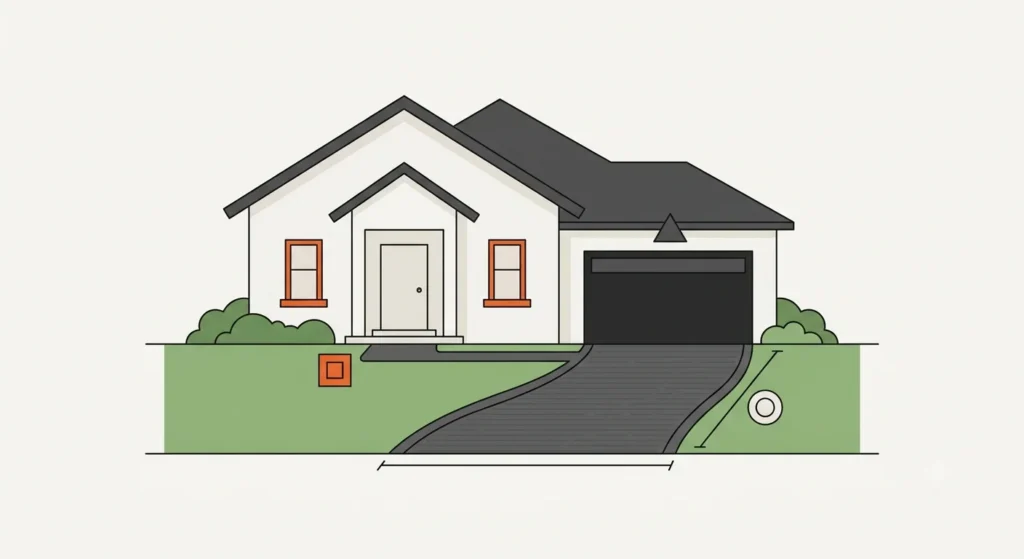
A 40 ft × 12 ft driveway, 5 in thick, $150/cu yd concrete, $2.50/sq ft finishing, 10% waste.
Surface area: 40 × 12 = 480 sq ft.
Volume: 480 × (5/12) = 200 cu ft → 200 ÷ 27 = 7.4 cu yd.
With waste: 7.4 × 1.10 = 8.15 cu yd.
Material cost: 8.15 × $150 = $1,222.
Finishing cost: 480 × $2.50 = $1,200.
Estimated total (material + finishing): $2,422 — excluding excavation, gravel base, and permits
Common Mistakes to Avoid
- Assuming the per-square-foot cost includes excavation and gravel base when it usually doesn’t.
- Using 4-inch slab thickness for a driveway instead of the recommended 5–6 inches.
- Applying the waste factor to finishing cost as well as material — finishing scales with finished area, not raw yardage.
- Not budgeting extra for decorative finishes like stamping or coloring, which add real cost per square foot.
Related Guidence
Frequently Asked Questions
How thick should a concrete driveway be?
Standard residential driveways for cars and light trucks are 5–6 inches thick. Driveways that will see heavier vehicles, like RVs or delivery trucks, should be 6–8 inches with reinforcement.
How much does a concrete driveway cost per square foot?
Most concrete driveways run $6–$12 per square foot installed, depending on thickness, region, and finish. Decorative stamped or colored finishes typically add $2–$6 more per square foot.
Does a driveway cost estimate include excavation and gravel base?
Usually not — most estimates cover concrete material and finishing labor only. Excavation, compacted gravel sub-base, and rebar or wire mesh are typically quoted as separate line items.
Try the Concrete Driveway Cost Calculator
Ready to run your own numbers? Use the free Concrete Driveway Cost Calculator on our site — just enter your measurements and get an instant, accurate estimate.
[ “concrete-driveway-cost” calculator here]