Vinyl Fence Panel Guide: Calculating Panels, Posts, and Gates

A detailed close-up photograph of a white vinyl fence post. A clean, classic-style pyramid post cap is installed on top. Two vinyl fence panels are seen connected to the shared post, illustrating the custom-routed slots where the smooth horizontal rails are securely inserted, creating a tight and professional modular joint. The surrounding backyard trees are visible but heavily blurred in the background.
Precision Engineering: Close-up view of the post cap detail and the routed slots used to connect modular vinyl panels.

Vinyl fencing is typically installed using pre-made panels rather than built board-by-board, so the key number is how many full panel-widths fit into the fence run once gate openings are subtracted out. This guide covers how to calculate panel count, post count, and how gates factor into both.

Subtracting Gates Before Calculating Panels

Each gate opening replaces one panel-width section of the run rather than adding to it. Before calculating panel count, subtract the total width taken up by all gates from the overall fence length — standard walk gates run 3–4 ft, while drive gates run 10–12 ft.

Calculating Panel Count

Divide the remaining fence length (after subtracting gate widths) by the standard panel width — most pre-made vinyl fence panels come in 6 ft or 8 ft widths — and round up, since a partial panel still means buying a full one (or a custom-cut piece). Most vinyl panels are not easily field-cut without special end brackets, so fence runs are usually adjusted slightly to fit full or supported partial panel widths.

Calculating Post Count

Post count follows directly from panel count: each panel needs a post on both ends, but adjacent panels share a post, so the formula is panels + 1 for a straight run, plus one extra post at each gate opening to frame it. This is a smaller post count than you might expect at first glance, since shared posts between panels reduce the total significantly compared to counting one post per panel end independently.

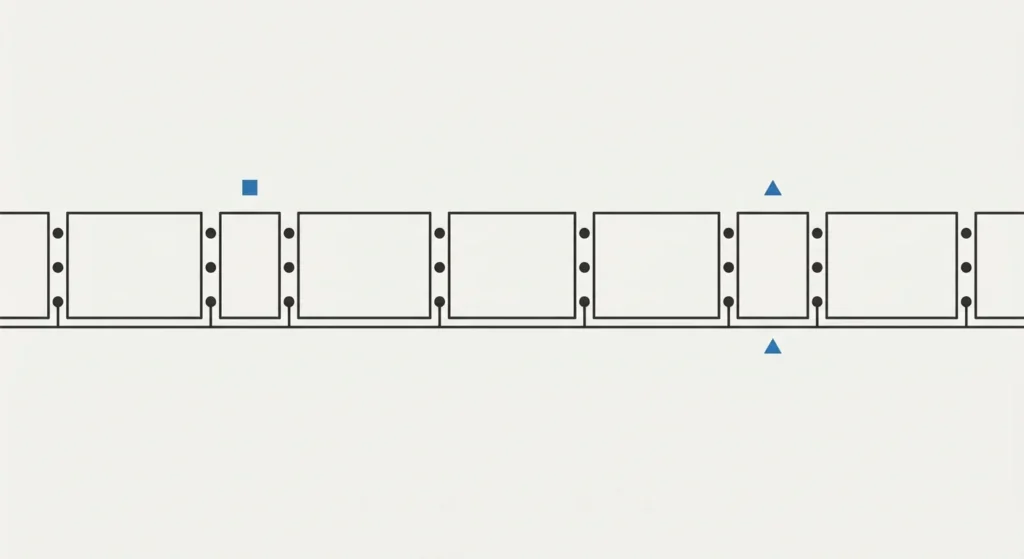
A clean, minimal flat-design technical diagram on a cream background. It features a linear sequence of charcoal-gray repeating rectangular panel shapes with small solid circular post markers between them. A single, wider gap shape indicates a gate opening. Small, distinct geometric shapes (blue solid square above a standard panel, blue solid triangle above and below the gate gap) serve as non-readable technical labels within plenty of white space.
Calculating Spacing: A minimalist diagram illustrating the repeating pattern of modular panels and the larger gap required for a gate opening.

Worked Example

100 ft total fence length, 6 ft panels, 1 gate at 4 ft wide.

Length remaining after gate: 100 − 4 = 96 ft.

Panels needed: 96 ÷ 6 = 16 panels.

Posts needed: 16 + 1 = 17, plus 1 extra for the gate opening = 18 posts.

Common Mistakes to Avoid

  • Calculating panel count on the full fence length without first subtracting gate width.
  • Counting one post per panel end instead of accounting for shared posts between adjacent panels.
  • Assuming vinyl panels can be field-cut to fit an odd-length run without special brackets.
  • Forgetting the extra post needed at each gate opening to frame it properly.

Frequently Asked Questions

What size are standard vinyl fence panels?

Most pre-made vinyl fence panels come in 6 ft or 8 ft widths, with heights commonly ranging from 4 ft (picket style) to 6 ft (privacy style).

How many posts do I need for a vinyl fence?

You generally need one more post than the number of panels, since adjacent panels share a post — plus one additional post at each gate opening to frame the gate.

Can vinyl fence panels be cut to fit an odd-length run?

Most vinyl panels are not easily field-cut without special end brackets, so fence runs are usually adjusted slightly (or use a shortened end panel from the manufacturer) to fit full or supported partial panel widths.

Try the Vinyl Fence Panel Calculator

Ready to run your own numbers? Use the free Vinyl Fence Panel Calculator on our site — just enter your measurements and get an instant, accurate estimate.

Leave a Reply

Your email address will not be published. Required fields are marked *