Fence Post Length Guide: Why a 6 Ft Fence Needs More Than a 6 Ft Post

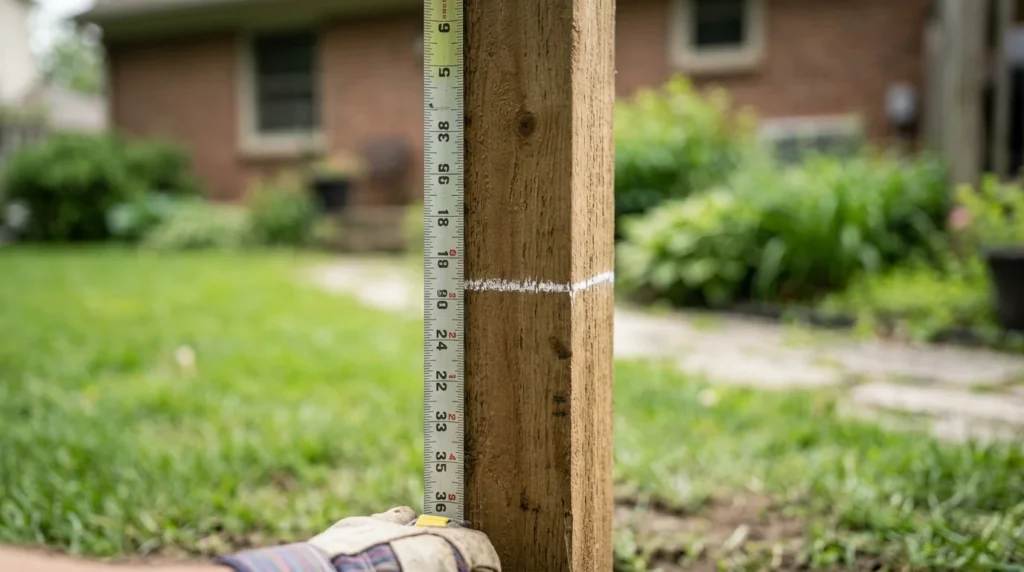
A high-resolution, photorealistic close-up of the lower section of a vertical 4x4 wood fence post. A white chalk line marks the grade level, and a tape measure is stretched vertically, starting at zero at the line and measuring the 'buried' length down the cleaned post. A carpenter's glove holds the tape hook taut in the lower corner.
Establishing the grade: This close-up shows the measurement of the post length that will be buried beneath the soil.

Fence posts are sold in standard lengths, but the length you need to buy is always longer than the visible fence height, since a portion of every post has to go underground for stability. This is one of the most common surprises for first-time fence builders — this guide explains the math so you order the right length the first time.

The Burial Ratio Rule

A common rule of thumb buries about a third (33%) of the post’s total length underground, with the remaining two-thirds standing above grade as the visible fence height. Taller fences, sandy soil, or high-wind areas may need up to half the post buried for adequate stability — the looser or less stable the soil, the more burial depth you want.

Calculating Total Post Length

If burial takes up 33% of total post length, then the visible height above ground represents the remaining 67%. To find total post length, divide your desired fence height by (1 − burial ratio). For a 6-foot fence at a 33% burial ratio, that works out to a post closer to 9 feet long, not 6 — a detail that catches people off guard when ordering.

Rounding to Standard Lengths

Posts are sold in standard lengths (often in 2-foot increments — 8 ft, 10 ft, 12 ft), so the calculated length usually gets rounded up to the nearest size actually stocked by suppliers. A calculated 9-foot need typically means ordering a 10-foot post, since posts cut shorter on site waste material and posts cut longer than needed aren’t sold.

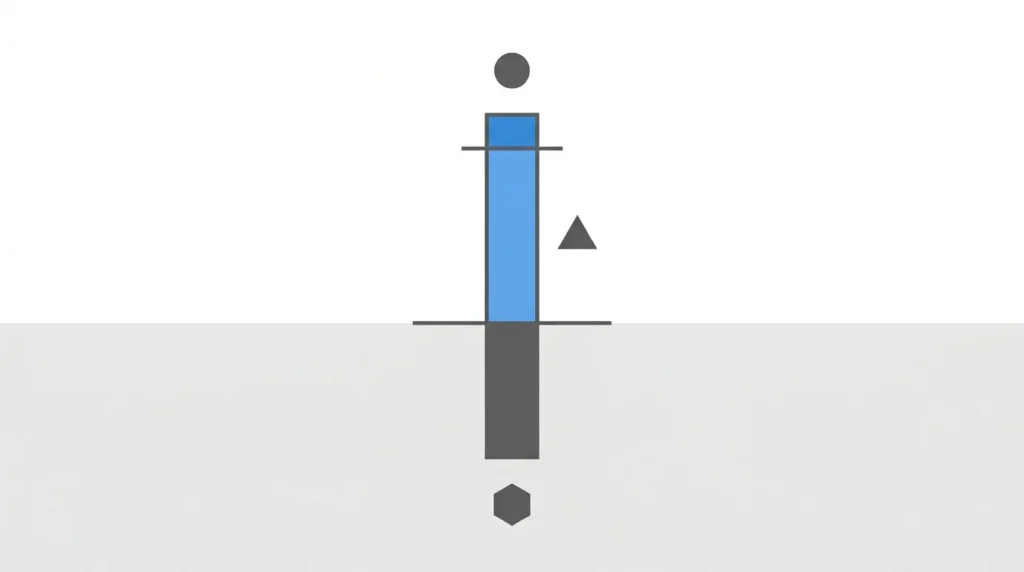
A simple, clean, flat-design side-view vector illustration diagram of a vertical fence post on a split white and grey background. The ground plane is marked by a horizontal grey line. The upper, visible part of the post is shaded light blue. The lower, buried part is shaded dark grey. Simple geometric labels (circle, triangle, hexagon) indicate the distinct sections.
Visualizing the relationship: A diagram illustrating the proportion of visible post length (blue) versus the crucial buried foundation length (dark grey).

Worked Example

Desired fence height: 72 in (6 ft), burial ratio: 33%.

Total post length needed: 72 ÷ (1 − 0.33) = 72 ÷ 0.67 ≈ 107.5 in ≈ 8.96 ft.

Round up to the nearest standard stocked length: 10 ft posts.

Common Mistakes to Avoid

  • Ordering post length equal to desired fence height, without accounting for burial depth at all.
  • Using the 33% burial ratio in loose or sandy soil that actually needs closer to 50% for stability.
  • Not rounding up to a standard stocked post length, leading to a special order or unnecessary cutting.
  • Ignoring local frost depth code, which may require deeper burial than the 33% rule of thumb suggests.
Frequently Asked Questions

How much of a fence post should be buried underground?

A common rule of thumb is to bury one-third of the post’s total length, though taller fences, sandy soil, or high-wind areas may need up to half the post buried for stability.

What length post do I need for a 6 foot fence?

Using the standard one-third burial rule, a 6-foot (72 in) fence needs roughly a 9-foot post, so most people round up to the nearest standard length sold, often 10 feet.

Try the Fence Post Length Calculator

Ready to run your own numbers? Use the free Fence Post Length Calculator on our site — just enter your measurements and get an instant, accurate estimate.

[ “fencing-post-length” calculator here]

Leave a Reply

Your email address will not be published. Required fields are marked *